
Why We Need Music To Survive

Image result for happy group of people
Credit: http://www.greenjoyliving.com/2012/06/why-groups-of-laughing-happy-people-are.html

Music is a magical social glue. Whether you’re at a festival or in a church, there’s something about music that unites us in all our diversity – and believe it or not, there’s a neurobiological explanation.

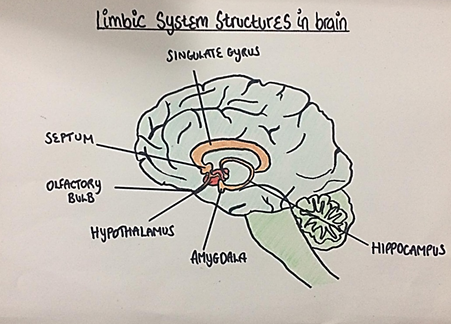
It seems as if our brains are hard-wired to experience music; from birth, humans show limbic responses to music. Steven Mithen, a professor of Archeolgy, claims the answer lies in our ancestral descent: his work argues a common decent between music and spoken language, claiming the two emerged from an emotional “proto-language” used by the Neanderthals. Yet the answer might lie elsewhere – an overwhelming number of studies have reported activity of the hippocampus during a musical experience.

The hippocampus is a notorious area of the brain, recognised for its role in memory, learning, spatial orientation and neurogenesis. However, numerous studies suggest it plays a crucial role in emotion, extending into the musical realm. Some researchers report hippocampal activity in response to music-evoked tenderness, peacefulness, frissons and sadness. Studies have even shown that synchronised rhythm with someone else increases activity of the hippocampus.

When activated by pleasurable music, the hippocampus interacts with the hypothalamus to lower levels of the hormone cortisol – in other words, it reduces emotional stress.

It’s telling that music activates this tender hotspot of emotion. Once activated, it evokes attachment-related emotions such as compassion, love and empathy – emotions which relate to the social functions of music. These feelings bind us in together during social functions, creating an authentic sense of community, closeness and connection.

Historically, music has also been a means of cultural identification, with individuals of different upbringing, ethnicity and lifestyles using it to express themselves.

Individual emotional states become one, promoting social cohesion mental well-being.

By nature, music involves social functions which are critical to our survival – without such homogeneity, we risk loneliness and social isolation, both risk factors for poor health and mortality.

We are social animals – the need for community is part of what makes us human.
How Music Rewards Your Brain

How does music make you feel?

       I’m not convinced that words can accurately describe it…

Think of that intense pleasure a moving piece evokes – for me, Frédéric Chopin’s Nocturne in C minor, Op. 48, No. 1 gives me that inexplicable emotion. You feel it as a chill, you see it as Goosebumps – its called musical frissons, and its extremely powerful. This response can be explained by activity of the dopaminergic mesolimbic reward pathway.

The Reward System

The “Emotional Nervous System”

It all starts in the brain regions containing dopamine neurons: the ventral tegmental area (VTA) and the Substantia nigra. When you experience something rewarding, such as food or drink, the neurotransmitter dopamine is released into target areas of the brain such as the Striatum and Prefrontal Cortex. Dopamine encodes information about reward expectation and motivates us to obtain pleasure. It typically acts as a reinforcer, meaning it makes us learn about rewards and seek them again in the future.

Structures in the striatum, called the nucleus accumbens and the caudate nucleus, are involved in representing hedonistic value. Yet strikingly, studies show that these regions and other components of the reward network are also active during music-evoked pleasure. This phylogenetically old network has enabled our survival, propelling us to obtain basic needs; that music activates this system suggests its role in persistence of the individual and species.

Musical Tension

Just as we find some music rewarding, other music can stir conflicting emotions. Like a good book, a musical piece is a coherent structure, composed of patterns and regularities. The building blocks of a structured piece are its acoustic elements: dynamics, tempo consonance or dissonance. As a piece becomes increasingly complex, so do the possibilities of what we expect to hear. So we are engaged throughout the piece, continuously predicting the next chord as our reward system awaits the verdict.

This musical tension grips your reward system – therefore you – with anticipation. It takes a skilled composer to build tension without causing unpleasantness. An example that comes to mind is Claude Debussy’s solo flute piece Syrinx: atonality is central to this haunting yet beautiful piece.

However, many pieces opt to build layers of tension, with the goal of resolution. If an unexpected chord occurs, emotion centers such as the amygdala and the orbito-frontal cortex are activated; once the structural breach is resolved, you feel relaxed. We naturally anticipate this relaxation, therefore our correct prediction causes an increase in dopamine. We are rewarded. Thus, it follows that unresolved music defies our prediction – in response, dopamine is not released, leaving us disappointed.

So, whether they knew it or not, Chopin and Debussy expertly gripped me by exploiting my dopaminergic mesolimbic reward pathway. The consequence? – a neurobiological and emotional journey every time I hear their music.

Can Music Help Autistic people?

An estimated one-third of people with autism are nonverbal – yet, music speaks louder than words for many sufferers, becoming a way to relate to the world.

Image result for autistic and music
Credit: http://www.thealternative.in/lifestyle/music-therapy-for-autism-can-help-change-lives/

Why Music?

Autism spectrum disorder (ASD) is a complex disability which interferes with social, verbal and cognitive skills. Amazingly, despite this socio-emotional impairment, people with ASD are often highly attuned to music-evoked emotions. Brain studies show that music can activate cortical and sub-cortical regions which are usually inactive in these individuals. Furthermore, some ASD individuals show activation in language areas whilst hearing music, not speech.

So, in many ways, those with autism adopt a novel voice – a musical language.

Despite this, there is currently no neurological evidence to support the benefit of music. To tackle this, researchers from the International Laboratory Brain, Music and Sound Research conducted a clinical trial of musical intervention.

Megha Sharda and her colleagues recruited 51 children, aged 6 to 12, with ASD; the children were then split into two groups, where only one received musical therapy. The music group worked with a therapist, using musical instruments and songs for social communication. Whilst the other group worked with the same therapist, they used non-musical methods for social communication; both interventions involved 45-minute individual weekly sessions lasting 8-12 weeks.

Remarkably, communication skills were higher in the music group after the intervention. The team also observed increased functional connectivity between the auditory cortex and subcortical/motor regions; this is usually reduced in individuals with ASD. Accompanying this, connectivity between auditory and visual regions decreased.

These findings reveal how music can rapidly reshape the brain, rectifying faulty connectivity between sensory cortices to enhance social interaction.

Reorganising the brain

We’re becoming increasingly aware of music’s power. In many ways, I imagine music as a craftsman, shaping communities, cultures, people – the brain. It’s ability to rearrange old networks in the brain and form new ones – a phenomenon known as neuroplasticity – is impressive.

A study by Huang and colleagues demonstrated this clearly. In the experiment, 20 female college students were enlisted; 10 of them began piano lessons before the age of 7 and continued training for at least 8 years, whilst the other 10 had no musical experience.

The students performed a memory task inside an MRI machine. At first, they listened to 20 words, which they attempted to remember. After this, they heard a list of 40 words; these contained the 20 words they had just heard in random order and 20 new words. Finally, the students had to state which of the 40 words were “old” and “new”.

The results were remarkable: musically trained students had the upper-hand because they could recruit their visual cortex to recall words.

Like most things in the brain, we can’t know for sure why this happens. It could be an adaptation to recall music during performance, however there possibilities are endless. Even so, the idea that musicians can recruit an area specialised for one function to perform another is exciting. Music intervention schemes for individuals with ASD could promote this plasticity, maximising the brain in creative ways.

Still, these are early findings; we need much more research into the neurological benefits of musical therapy before we draw definitive conclusions. Nonetheless, music could be a robust tool for individuals with ASD in the future.

The Musician: An Emotional Radar

“Am I too sensitive to be in this world?” – Winona Ryder

For a musician, this question is uncomfortably familiar – I can admit, I’ve asked myself countless times. Yet, musicians are notoriously sensitive. This enhanced trait can even extend outwards, when they tap into the emotions of others in an unnerving way.

Honestly, that’s an abstract concept. However, researchers at the Northwestern university have provided biological evidence for a musicians’ enhanced perception of emotion. In our brains, a similar method is used to detect emotion in both music and speech. Since musicians have acute awareness of acoustics, do they also have heightened sensitivity to emotion in speech?

To find out, the scientists employed 30 men and women between the age of 19-35. Divided into musicians and non-musicians, participants watched a muted nature movie whilst listening through headphones to “an emotionally charged human vocal sound” – specifically, an infant’s unhappy cry.  

Electrodes were connected to their scalps: these detected the brainstem’s response, a region which responds to the emotional features of sound.

Layers of acoustic complexity constitute sound; more elaborate features, such as pitch deviations, mostly bring emotion into speech. The team found that musicians show enhanced response to the most complex features, whilst dismissing simpler acoustic features more than non-musicians.

In fact, this smaller response is explained by acoustic expertise – put simply, since musicians require less brain power to process simple acoustic features, they use their extra reserves to detect acoustic nuances.

So, it finally makes sense: Musicians have a sharpened detection for sounds which is not limited to musical sphere. In many ways, complex acoustic features are the heart of spoken word, providing depth and dimension to social interaction. The musical ear picks up subtle variation in pitch, dynamics and periodicity of speech, unlocking information about the emotions of others.

Such non-lexical expression of speech – referred to as “affective prosody” – traces back to the amygdala. This brain region is sensitive to emotions expressed by faces, smells, vocalisations and music, suggesting its role in conveying emotional information between members of the same species. In other words, the amygdala is activated by social signals of emotion.

But how does this relate to a musician’s sensitivity?

Well, try and picture this: the amygdala sits at the heart of emotion networks in the brain and is connected to several major computational nodes. When activated, its prime position enables modulation and regulation of systems which control physiological arousal and motoric expression, among many other things. This is synthesised into a subjective feeling which manifests itself as hypersensitivity in the musician. Thus, the amygdala orchestrates emotional sensitivity, acting as a potent emotional radar.

So, in answer to the existential question, “Am I too sensitive to be in this world?”- Yes and No. Perhaps musicians are highly sensitive. Regardless, this world would suffer without such emotionally intelligent beings.